Analysis of Main Materials and Characteristics of Solar Aluminum Mounting Structures
In mounting systems, material selection forms the foundation of overall structural design. Common materials include aluminum alloys, stainless steel, and galvanized steel. In the Taiwan market, aluminum extrusion is the most widely used.
The key characteristics of aluminum alloy are its light weight and high strength. Its density is only about one-third that of steel, yet through proper design and optimized cross-sections, it can still achieve excellent structural performance. This gives solar aluminum mounting structures a clear advantage in rooftop applications, effectively reducing building load and making them especially suitable for metal sheet roofs and reinforced concrete (RC) structures.
Another important characteristic is corrosion resistance. Aluminum naturally forms an oxide layer on its surface. When combined with anodizing or surface coating treatments, its resistance to acid rain and salt corrosion is further enhanced, which is particularly important for Taiwan’s coastal and industrial environments.
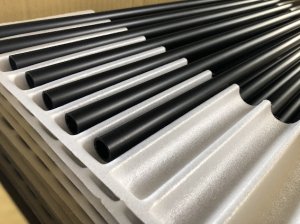
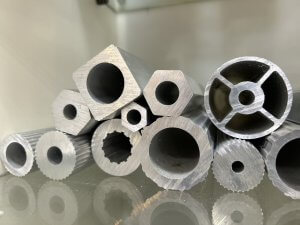
In addition, aluminum extrusion offers high processing flexibility. Various cross-sectional shapes can be produced through different die designs, such as T-slots, C-channels, or dedicated rails, allowing for more flexible structural designs and improved installation efficiency.
In contrast, although galvanized steel has lower cost and high strength, it is heavier, more difficult to install, and still requires long-term anti-rust maintenance. Therefore, in rooftop and small-to-medium-sized projects, solar aluminum mounting structures have gradually replaced traditional steel structures and become the mainstream choice.
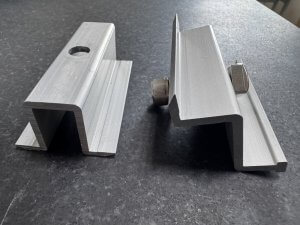
Key Components and Functional Analysis
In addition to the main structural materials, a complete mounting system requires a variety of components to ensure overall stability and installation efficiency. Although these components are small, they play indispensable roles in the system.
-
Rails
These are the primary structures that support solar modules. They are typically made from aluminum extrusions and feature internal slot designs that allow bolts to slide easily for quick positioning.
-
Clamps
Divided into mid clamps and end clamps, they are used to secure solar panels. Their design must consider load distribution and anti-slip performance, and they are usually paired with stainless steel bolts to ensure long-term stability.
-
Connectors
Used to extend rails or connect different modules, maintaining structural consistency and rigidity.
Roof mounting bases vary depending on the roof type. For example, metal sheet roofs use dedicated clamps, while RC roofs use expansion bolts combined with waterproof gaskets to prevent leakage.
In addition, grounding components and electrical fasteners are also crucial to ensure safe system operation.
In practical applications, solar aluminum mounting structures often adopt modular designs that integrate rails and components, enabling installers to assemble systems quickly and significantly reducing construction time and error rates.
Aluminum Extrusion Process: The Key to Quality and Precision
Aluminum extrusion is not just a material but an engineered product formed through multiple precise processes. Its manufacturing process directly affects the quality and lifespan of the mounting system.
-
Billet Heating
Aluminum billets are heated to an appropriate temperature to achieve good plasticity.
-
Extrusion Forming
The heated aluminum is forced through a die under high pressure to form a specific cross-sectional shape. This process determines the structural form and strength performance of solar aluminum mounting structures.
After extrusion, the material undergoes cooling and straightening to prevent deformation and ensure dimensional accuracy.
-
Cutting and Secondary Processing
Includes drilling, tapping, and slotting to meet installation requirements.
-
Surface Treatment
Commonly anodizing, which enhances corrosion resistance while improving appearance and product lifespan.
High-quality aluminum extrusion products require strict control over dimensional tolerances and surface treatments to ensure smooth installation and structural stability. Therefore, choosing a manufacturer with a complete production process is critical to ensuring the quality of solar aluminum mounting structures.
Structural Design and Installation Process Overview
Installing solar mounting systems is a professional task that combines structural engineering and construction techniques. The design must be tailored to site-specific conditions.
-
Site Assessment
Includes evaluating roof structure, load-bearing capacity, wind pressure conditions, and solar orientation. These factors influence layout and anchoring design.
-
Structural Planning
Includes module arrangement, tilt angle, and spacing design to ensure optimal energy generation and structural safety.
During construction, the base is installed first, followed by waterproofing treatment. Then aluminum extrusion rails are fixed, ensuring proper alignment and levelness.
Solar panels are then installed and secured onto the rails using clamps, completing the module configuration.
-
Electrical Connection and Grounding Design
Ensures safe system operation.
In terms of installation efficiency, solar aluminum mounting structures offer strong modular advantages, enabling rapid assembly and reducing labor requirements—especially suitable for large-scale projects and tight construction schedules.
Advantages of Solar Aluminum Mounting Structures
As the solar industry continues to grow, mounting systems are also evolving. Aluminum extrusion structures demonstrate several advantages in the market.
-
High Installation Efficiency
Modular design allows faster and more precise installation. Additionally, maintenance costs are low, as aluminum has excellent corrosion resistance and requires minimal upkeep.
-
Strong Customization Capability
Structures can be tailored to meet specific project requirements, improving overall system performance.
Furthermore, aluminum is recyclable, aligning with environmental sustainability and ESG trends.
Future developments include integration with smart monitoring systems, enhanced typhoon-resistant designs, and the use of lighter yet stronger materials. In Taiwan’s typhoon-prone environment, structural strength and safety will remain key design priorities.
Solar aluminum mounting structures have become the mainstream solution in the market and continue to evolve toward higher efficiency, improved safety, and smarter integration.

Solar mounting systems form the foundation of the entire power generation system. Material selection, component design, and installation processes all directly impact system stability and lifespan. Aluminum extrusion, with its lightweight, high strength, and excellent weather resistance, has become the most competitive choice in today’s market.
From material characteristics and manufacturing processes to actual installation, solar aluminum mounting structures demonstrate strong technical integration and construction efficiency, making them especially suitable for Taiwan’s variable climate and fast-paced project requirements.
For businesses and investors, choosing high-quality mounting systems not only improves power generation efficiency but also reduces long-term maintenance costs and risks.
For related needs such as custom die development, co-extrusion of different materials, composite processing, and surface treatment, please contact 【Yuan-Cheng Aluminum Co., Ltd.,】 in Tainan, Taiwan for professional service.
contact us
what’s app >>