Features and Specifications of Aluminum Enclosed Wire Ducts
In homes, offices, factories, and commercial spaces, wires often need to run along walls, ceilings, the sides of equipment, or around machinery. Exposed cables can make an area look untidy and may be more difficult to maintain because of pulling, impacts, dust, or cleaning work. An aluminum enclosed wire duct uses an aluminum alloy profile to form the housing, together with a cover, end caps, and mounting accessories. This keeps wiring organized inside the duct while leaving room for future inspection and expansion.
These products do more than simply hide wires. To meet appearance, load-bearing, installation, and long-term use requirements, you need to select the right cross-sectional dimensions, material, wall thickness, mounting method, and surface finish. The following sections explain how aluminum enclosed ducts are made and selected for different environments, covering their features, manufacturing process, practical benefits, and specification planning.
Product Features: Enclosed Construction and Aluminum Alloy Profiles
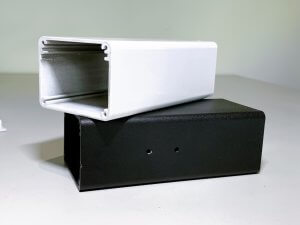
An enclosed duct generally consists of a body and a cover. After the wires are placed inside the body, the cover is secured with screws, clips, a sliding mechanism, or another design. How easily the cover can be removed, whether it sits flush once secured, and how the ends are finished all affect installation and future maintenance. Cover fastening methods vary by product, so they should be chosen based on maintenance frequency, installation location, and appearance requirements.
- Aluminum alloy is relatively lightweight.
- It is easy to machine.
- Extrusion can produce complex cross-sections.
These properties allow the duct base, side walls, mounting grooves, and cover joints to be incorporated into a single cross-section. Aluminum alloy is selected according to the product’s purpose and design requirements. For example, the 6063 series has good extrudability, ductility, and suitability for surface finishing, making it a commonly used extrusion alloy. Actual material selection should still be evaluated based on load, span, installation conditions, and required strength; the alloy designation alone does not determine whether a material is suitable.
An enclosed design helps conceal the wires inside the duct, keeping equipment areas and interiors neat. However, “enclosed” generally means that a cover closes the duct opening; it does not mean that the product has a specific rating for water resistance, dust protection, or electromagnetic shielding. If the duct will be exposed to moisture, dust, oil, outdoor sunlight, or special electrical requirements, check whether the joints, end caps, mounting holes, and surface finish meet those needs. Do not assume a level of protection based on the product name alone.
The duct cross-section can be rectangular, flat, square, or customized to suit the equipment layout. For corners, branches, or changes in direction, the duct can be fitted with end caps, connectors, elbows, or on-site cuts. The appearance can also be tailored to the space with anodizing, coating, or other surface treatments. Color and texture are not merely decorative; they affect how well the product coordinates with machinery, walls, and surrounding equipment.
Manufacturing Process: From Drawing Review to Final Inspection
- Before production, the installation location and wiring layout must first be established.
The manufacturer will typically confirm the duct’s overall length, width, height, cross-sectional shape, cover orientation, mounting method, and whether holes, angled cuts, or connector machining are required. If the wiring will cross walls, machinery, or different heights, provide the general route and locations of bends as well. The more complete the drawings, the easier it is to confirm dimensions before tooling and mass production, reducing the risk that the finished product will not fit the site.
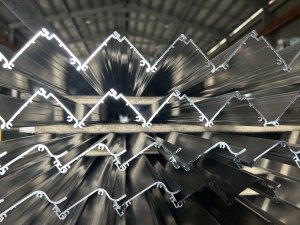
The basic aluminum extrusion process involves heating an aluminum alloy billet and applying pressure to push the material through a die with the specified cross-section, forming a continuous profile. The extrusion result is affected by factors such as the alloy, billet condition, die design, and process controls. The cross-section must therefore be designed with both function and manufacturability in mind. Shapes that are too complex, have large variations in wall thickness, or make material flow difficult may increase the complexity of die design and forming control.
- After extrusion, the profile is cooled, straightened, and cut to length as required.
Further processing is then scheduled according to the material condition. These steps help ensure that the profile’s dimensions, straightness, and overall shape meet the needs of subsequent operations. Straightness and consistent length are especially important when the product will be installed over a long run along equipment. For shorter modular assemblies, check that the joined sections will not have noticeable gaps or height differences due to dimensional variation.
- Mechanical machining is then performed according to the drawings.
This may include drilling, milling, tapping, slotting, or cutting local openings. Holes may be used to secure the duct or to provide entry and exit points for wiring or connections. Their locations and dimensions should be confirmed in advance to prevent interference with the wiring path, connectors, or equipment structure. If the cover needs to be removable, check that the joint can be assembled smoothly and that screws or clips will not obstruct the wiring.
- The surface treatment is selected according to the application.
Anodizing creates a surface oxide layer and can be paired with different colors and finishes. Coating can help match a specified color or the design of the space. Before surface treatment, consider the material’s surface condition, machining marks, and areas that need masking, and confirm that the finish suits the environment and cleaning method. If the duct will be installed outdoors or in a damp location, also discuss details such as joint gaps, drainage, end closures, and mounting accessories. Changing the surface color alone does not complete the protective design.
Finally, the product is inspected for appearance, dimensions, and assembly. This includes checking for visible deformation, flatness of cut ends, ease of cover installation, hole locations against the drawings, and connector fit. For products made in batches, the parties can also agree on inspection items and keep dimensional and appearance records, providing a consistent reference for future replacement or maintenance.
Benefits: Organized Wiring, Protection, and Easier Maintenance
- The first benefit is organized wiring.
Keeping wires inside the duct reduces loose or tangled cables, making it easier to clean around equipment and easier for personnel to identify cable routes. For machinery, workbenches, display cabinets, office furniture, and control equipment, orderly wiring makes the finished installation easier to understand and gives maintenance staff a clearer starting point when tracing cables.
- The second benefit is added separation and shielding around the wires.
The aluminum body and cover can reduce the chance of wires being touched, scraped, or covered in dust during everyday use. The actual level of protection still depends on the duct’s construction, installation location, and operating environment. If the wiring is near high temperatures, chemicals, heavy impacts, or substantial moisture, choose a suitable product and additional protective measures based on the risks, and have a qualified professional confirm electrical safety.
- The third benefit is adaptability to the space and equipment design.
With a planned extrusion cross-section, the duct’s shape can be tailored to a wall, machine frame, or furniture structure. Depending on the requirements, it can be mounted with screws, brackets, or other connectors. Planning cable outlets, corners, and access space at the design stage can reduce the need for last-minute changes during installation and helps with both appearance and future maintenance.
The weight of aluminum is relatively easy to manage, making handling and installation more convenient. However, whether a product can span a particular distance, withstand external forces, or remain straight depends on the cross-sectional dimensions, wall thickness, spacing between mounting points, and actual loads. A product’s apparent thickness alone is not enough to assume that it can bear additional weight. If the duct will be mounted on vibrating machinery, the mounting method and anti-loosening design should also be reviewed.
Specification Planning: Dimensions, Material, Wall Thickness, and Accessories
- The first step in planning specifications is to estimate the types and number of wires the duct needs to hold, and allow room for organization and maintenance.
If the duct is sized only to fit the current wires, adding more later may require disassembly and reinstallation. Evaluate the internal space based on cable diameters, bend requirements, and expected expansion. Also avoid compressing the wires during installation or using bend radii that are too small, as these can increase the risk of damage. Electrical wiring and cable selection must comply with applicable standards and be confirmed by qualified personnel.
- Dimensions can be specified by confirming the duct’s outside width and height, internal clearance, body length, cover dimensions, and wall thickness.
Drawings should clearly indicate reference surfaces, dimensional tolerances, and hole locations, and state whether the specified length applies to each individual section or the overall layout. If the product will be cut on-site, specify the cutting locations and how the ends should be finished. If it needs to connect to existing equipment, measure the equipment’s actual dimensions rather than relying only on old drawings or verbal estimates.
- Material can be discussed based on the product’s purpose, machining method, and strength requirements.
Common extrusion alloys have different applications, and the alloy designation, temper, and surface treatment can all affect processing and performance. Before ordering, confirm material requirements, appearance grade, color, surface treatment, and whether material or process documents are required. Raise any special environmental or quality requirements during the quotation and drawing review stages so the manufacturer can assess feasibility.
- Accessories are also part of the specifications.
Common items may include covers, end caps, connector plates, mounting bases, angled connectors, and screws. Different accessories affect assembly order and maintenance. For example, consider which side the cover will open from, how the ends will be finished, and how adjacent ducts will connect. If the duct runs along equipment edges or through areas people may touch, pay attention to burrs and exposed sharp corners to prevent scratches or damage to the wires after installation.
Applications and Maintenance
Aluminum enclosed ducts can be used for equipment wiring in homes and commercial spaces; cable management along desks or walls in offices; wire organization around factory machinery; and wire concealment in display equipment or custom mechanisms. Each application has different requirements for appearance, mounting, and protection, so specifications should not be based on generic dimensions alone. Indoor applications may place greater emphasis on appearance and ease of removal, while equipment environments may prioritize mounting strength, vibration resistance, and cable outlet locations.
After installation, periodically check that the cover is secure, the mounting screws are tight, the duct has not been deformed by impact, and the ends are free of foreign objects or visible damage. Choose a cleaning method suited to the surface treatment and environment, and avoid tools or chemicals that could scratch the surface or damage its coating. If you find damaged cable insulation, water entering through a joint, or a loose mounting point, have qualified personnel inspect it before arranging repairs. Do not open the duct or move wires while the system is energized.
Before ordering, prepare installation photos, a hand-drawn layout, required dimensions, cable entry and exit locations, and a description of the intended environment. Also specify the desired surface treatment and accessories. If you have not yet determined the cross-section, you can provide the number of wires, equipment dimensions, and installation constraints for the manufacturer to assess. Clear communication helps coordinate design, tooling, machining, and installation, and reduces the chance of discovering that the product does not fit or lacks accessories after delivery.
Selecting an aluminum enclosed duct requires an overall assessment of the wiring layout, installation environment, dimensions and structure, material, machining method, and surface treatment. Clearly explain the actual requirements and drawing specifications first, then confirm the duct body, cover, accessories, and mounting method. This helps ensure that the finished product keeps wiring organized, looks appropriate, and remains easy to maintain.
For information about aluminum products, custom die development, co-extrusion of dissimilar materials, secondary machining, surface treatments,aluminum extrusion machining, or related specifications, contact YCAL Yuan Cheng Aluminum in Tainan, Taiwan.