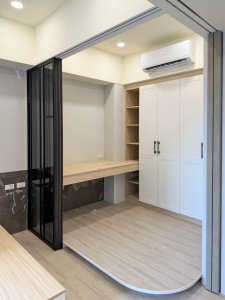
What Are the Materials and Types of Aluminum Lightweight Partition Systems?
The interior design and construction renovation industry is placing increasing emphasis on construction efficiency, spatial flexibility, aesthetic design, and long-term durability. As a result, various types of lightweight partition systems have rapidly become more popular. Among them, aluminum-based partition systems have gradually become a mainstream solution for commercial offices, residential interiors, technology factories, medical clinics, and retail display spaces.
In the past, many people associated partitions mainly with wooden walls, cement walls, or traditional light steel frame systems. However, as modern architecture increasingly focuses on lightweight structures, modular construction, and environmentally friendly building materials, aluminum extrusion structures have started replacing traditional materials on a large scale. Especially in high-humidity environments, wooden partitions are prone to moisture damage, deformation, and mold growth, while iron structures are susceptible to oxidation and rust. Therefore, aluminum materials with moisture resistance, anti-rust properties, fast installation, and recyclability are gaining significant attention in the market.
Today, Aluminum【Lightweight Partition】systems are widely used in technology company offices, co-working spaces, department stores, medical clinics, industrial factories, and even residential interior renovations. In addition to providing a modern appearance, aluminum partitions can also be customized according to spatial requirements, balancing sound insulation, lighting, safety, and maintenance convenience.
When planning interior spaces, many consumers often hear terms such as aluminum partitions, aluminum-framed glass partitions, and aluminum extrusion systems. However, different materials, structural designs, and processing methods directly affect overall quality and service life. Understanding the material types, system structures, manufacturing processes, core advantages, and current market trends of aluminum partition systems can help readers better appreciate the true value of modern aluminum partition solutions.
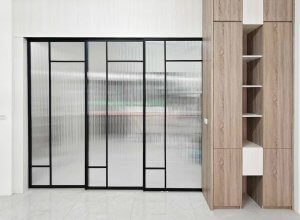
Why Have Aluminum Partition Systems Become Mainstream?
Modern construction and renovation projects increasingly emphasize spatial flexibility and construction efficiency, making aluminum an important core material in partition engineering.
- One of the biggest advantages of aluminum is its two major characteristics:
-
Lightweight
-
High strength
For building structures, aluminum can effectively reduce floor loading. For construction teams, it significantly improves installation efficiency.
Especially in commercial office markets, construction time often represents cost. If installation takes too long, businesses may suffer operational losses. Therefore, many companies prioritize Aluminum 【Lightweight Partition】 systems when planning office spaces.
In addition, aluminum itself has excellent weather resistance. Due to humid environments such as Taiwan’s climate, traditional wood materials tend to expand and deform, while iron components easily rust. Aluminum materials treated with anodizing or powder coating can greatly improve moisture resistance and corrosion resistance.
In recent years, the rise of ESG and green building trends has further increased demand for aluminum materials. Since aluminum is recyclable, it is considered more environmentally friendly than traditional construction materials. As a result, many large-scale construction projects and technology industries have started prioritizing aluminum partition systems.
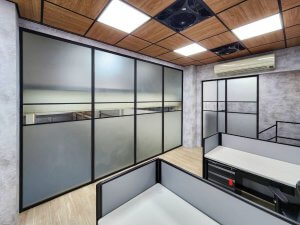
System Components and Material Classification
A complete aluminum partition system actually includes a variety of materials and structural designs.
It can generally be divided into the following categories:
- Aluminum Extrusion Frame System
Aluminum extrusion is the most important core structure of the entire partition system.
Through high-temperature extrusion technology, aluminum can be manufactured into various shapes and sizes, including:
- Door frame profiles
- Main structural columns
- Upper and lower tracks
- Glass fixing frames
- Reinforcement structural components
Currently, most high-quality Aluminum 【Lightweight Partition】 systems use 6063 aluminum alloy, which offers excellent machinability, dimensional stability, and high structural strength.
- Surface Material System
Surface materials directly affect the overall appearance and spatial style.
Common materials include:
- Tempered glass
- Fluted glass
- Frosted glass
- Aluminum honeycomb panels
- Aluminum composite panels
- Calcium silicate boards
Among these, glass partitions are currently the most popular choice for commercial office spaces because they improve lighting and visual openness.
- Acoustic and Sealing System
The true factor affecting sound insulation is often not the panel itself, but the internal acoustic and sealing design.
Common materials include:
- Rock wool
- Polyester acoustic insulation
- EPDM sealing strips
- Shock-absorbing foam
Professional Aluminum 【Lightweight Partition】 systems usually place special emphasis on the sealing performance of door gaps, glass edges, and structural joints.
- Hardware Accessory System
Although hardware components may appear insignificant, they are critical to durability.
Common hardware includes:
- Sliding tracks
- Hinges
- Dampers
- Automatic door closers
- Floor hinges
- Fixing clamps
High-quality hardware can effectively extend service life and improve operational smoothness.
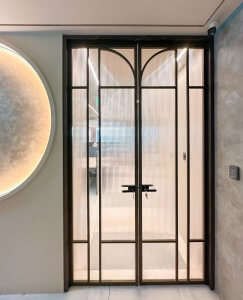
Main Advantages of Aluminum Lightweight Partition Systems
Aluminum partitions are not only modern in appearance, but also offer many practical advantages, including construction efficiency, durability, maintenance convenience, and environmental benefits.
- Lightweight Yet Structurally Strong
One of aluminum’s greatest characteristics is lightweight construction.
Compared with traditional cement walls, wooden partitions, or iron structures, aluminum is significantly lighter, helping reduce the load on building floors. As modern buildings increasingly emphasize structural safety and seismic resistance, lightweight construction materials are becoming more important.
Although aluminum materials are lightweight, aluminum extrusion designs still provide excellent structural strength. Professional aluminum extrusion systems use cross-sectional engineering designs to enhance load-bearing capacity, allowing stable support even for large glass panels.
- Excellent Moisture, Rust, and Corrosion Resistance
Traditional wooden partitions can expand, deform, develop mold, or attract termites due to humidity. Iron components are also highly prone to rust, especially in coastal areas.
Aluminum is different.
Aluminum naturally possesses oxidation resistance. In addition, modern aluminum materials often undergo:
- Anodizing treatment
- Powder coating
- Fluorocarbon coating
These treatments significantly improve moisture resistance and corrosion resistance. This is one of the major reasons why Aluminum 【Lightweight Partition】 systems have rapidly expanded in residential, medical, and commercial office markets in Taiwan.
- Fast Construction Speed
Modern renovation projects place great importance on construction schedules. Especially for commercial spaces and office renovations, extended construction periods may result in business losses.
Most aluminum partition systems use modular construction methods, making installation much faster than traditional masonry work.
Key advantages include:
- Rapid on-site assembly
- Pre-fabrication capability
- Reduced wet construction work
- Reduced dust pollution
- Reduced construction noise
As a result, many shopping malls, department stores, and co-working offices prefer Aluminum 【Lightweight Partition】 systems.
- High Spatial Flexibility
One of the biggest advantages of aluminum partitions is the ease of future space adjustments.
Traditional cement walls often require:
- Demolition work
- Waste disposal
- Extensive repair work
This not only increases costs but also disrupts business operations.
Aluminum partition systems, however, support modular disassembly and reassembly. If a company expands, reorganizes departments, or redesigns office layouts, only partial adjustments are required, greatly reducing future renovation costs.
- Enhanced Sound Insulation Options
Many people mistakenly assume aluminum partitions provide poor sound insulation. In reality, sound insulation mainly depends on internal structures and acoustic materials.
High-quality aluminum partition systems commonly incorporate:
- Rock wool
- Polyester acoustic insulation
- Airtight sealing strips
- Acoustic glass
Professional engineering design can effectively reduce noise interference. Since modern offices value meeting privacy, many premium Aluminum 【Lightweight Partition】 systems strengthen their acoustic performance.
Modern Appearance and Aesthetic Appeal
Modern interior design increasingly emphasizes minimalism and premium textures, making aluminum highly favored by designers.
- Current aluminum frame finishes include:
- Matte black
- Champagne gold
- White baked coating
- Wood grain transfer finish
- Titanium gray
Combined with glass, these finishes create highly modern spatial aesthetics.
- Long Service Life
High-quality aluminum partitions combined with professional installation and premium hardware usually offer long service lives. Unlike wood materials, aluminum is less affected by humidity and deformation, providing greater long-term stability.
This is another important reason why many businesses are willing to invest in Aluminum 【Lightweight Partition】 systems.
-
Conclusion
Aluminum materials have become indispensable in modern partition engineering. From commercial offices and industrial factories to medical clinics and residential interiors, aluminum partitions provide fast installation, moisture resistance, durability, and modern aesthetics while also meeting the growing demand for environmentally friendly and modular construction methods.

Especially in humid climates such as Taiwan, traditional wooden and iron materials are more vulnerable to mold, rust, and deformation, while aluminum significantly improves service life and overall spatial quality. Furthermore, advances in aluminum extrusion processing technologies ~~ including customized mold development, co-extrusion of mixed materials, composite processing, surface treatment, sound insulation design, and smart integration ~~ have greatly expanded the application flexibility of modern Aluminum 【Lightweight Partition】 systems.
For businesses, aluminum partitions improve space efficiency and corporate image. For residential users, they enhance living comfort and simplify future maintenance. Therefore, when planning partition projects, it is important to focus not only on price, but also on material quality, manufacturing precision, hardware durability, and installation expertise.
For customized mold development, co-extrusion solutions, composite processing, and surface treatment services, please contact 【Yuan-Cheng Aluminum Co., Ltd.,】 in Tainan, Taiwan.
contact us
what’s app >>