What Is a CNC Lathe? How Are Aluminum Extrusions Processed and Designed?
In today’s rapidly transforming manufacturing environment, relying on a single processing technology is no longer sufficient to meet market demands for high precision, high efficiency, and high flexibility. This is especially true in automation equipment, mechanical structures, and the electronics industry, where products must not only maintain structural stability but also achieve precise machining and efficient assembly. As a result, the integration of aluminum extrusion processing with CNC lathe technology has become a mainstream and critical manufacturing approach.
Aluminum extrusions offer advantages such as lightweight properties, high strength, and modular design, allowing for the rapid formation of primary product structures. Meanwhile, CNC lathes provide high-precision secondary machining capabilities, ensuring dimensional accuracy, hole positioning, and assembly precision. By integrating these two technologies, manufacturers can significantly reduce production costs, shorten development time, and improve product consistency and stability.
Incorporating aluminum extrusion processing and CNC integration from the design stage is no longer just a technical option~it is a key strategy for enhancing a company’s competitiveness.
What Is a CNC Lathe?
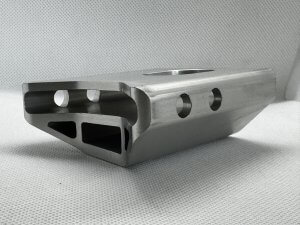
A CNC lathe (Computer Numerical Control Lathe) is a machine tool that uses computerized numerical control systems to perform automated machining. Its core concept is to control tool movement through programmed instructions, cutting materials with high precision and efficiency.
-
Basic Working Principle of a CNC Lathe
A CNC lathe typically operates through the following steps:
- Convert design drawings into machining programs (G-code)
- The control system reads the instructions
- Drives the spindle and cutting tools
- Performs precision cutting operations
- Produces high-precision components
This digital control method enables machining accuracy at the micron level, far surpassing traditional lathes.
-
Characteristics of CNC Lathes
- High precision: Stable control of dimensional tolerances
- High efficiency: Automation reduces labor costs
- Excellent repeatability: Consistent quality in mass production
- High flexibility: Different parts can be processed by simply changing programs
-
Advantages of CNC Lathes
The greatest advantage of CNC lathes lies in their combination of stability and efficiency. They are particularly suitable for use with aluminum extrusion processing, especially in secondary operations such as drilling, tapping, and facing.
Key Processes in Aluminum Extrusion
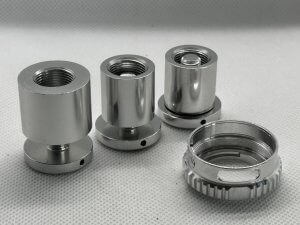
Aluminum extrusion processing involves heating aluminum billets and forcing them through a die to create specific cross-sectional shapes, followed by secondary machining. This technology is widely used in Taiwan, especially in mechanical structures and construction materials.
-
Aluminum Extrusion Process Flow
A complete process includes:
- Heating aluminum billets (approx. 400–500°C)
- Extrusion through a die
- Cooling and straightening
- Cutting to required lengths
- Surface treatment (anodizing, powder coating)
- CNC precision machining
The key factors lie in die design and post-processing precision control.
-
Characteristics of Aluminum Extrusions
- Lightweight: Low density for easy transport and assembly
- High strength: Can withstand structural loads with proper design
- Corrosion resistance: Suitable for outdoor and industrial environments
- Good thermal conductivity: Ideal for heat dissipation applications
-
Advantages of Aluminum Extrusion Processing
The main advantage is high customization. Complex structures can be formed in a single extrusion process, greatly reducing assembly costs and machining time.
Key Considerations in Aluminum Extrusion Design
Designing aluminum extrusions is not just about drawing shapes—it requires balancing material properties, processing methods, and application needs.
- Uniform Wall Thickness
Avoid large thickness variations to prevent deformation and instability. - Fillet Design
Avoid sharp corners; include radii (R angles) to improve material flow and reduce die wear. - Structural Symmetry
Maintain balanced designs to prevent bending or twisting. - Hole and Hollow Design
Avoid overly small holes or complex structures that increase manufacturing difficulty. - Functional Integration
Incorporate features like slots, clips, and rails directly into the extrusion profile to reduce secondary machining. - Integration with CNC Machining
Let extrusion handle structure while CNC ensures precision. - Precision Allocation
Use CNC only for critical dimensions to control costs. - Material Selection
6063 for general and aesthetic use; 6061 for high-strength structural parts. - Surface Treatment Considerations
Avoid dead corners and allow for proper hanging during finishing processes. - Cost Control
Simpler designs, fewer processes, and better material utilization lead to lower overall costs.
Applications of Aluminum Extrusion Processing
The aluminum extrusion industry has a well-established supply chain, covering raw materials, die manufacturing, processing, and assembly.
-
Common Applications
- Automation equipment: machine frames and rail structures
- Construction: doors, windows, curtain walls
- Electronics: heat sinks and enclosures
- Transportation: structural components
-
Competitive Advantages
Manufacturers excel in:
- Quality control
- Rapid prototyping
- Customized design services
- Strong integration with CNC machining
-
Future Trends
With the growth of AI equipment, automation, and green energy industries, demand for aluminum extrusion processing continues to rise—especially in lightweight and modular design applications.
How CNC and Aluminum Extrusion Are Integrated
The concept is simple:
“Use aluminum extrusion for structure, and CNC for precision.”
-
Core Integration Concept
- Aluminum extrusion: responsible for shape and structure
- CNC machining: responsible for precision and functionality
-
Practical Integration Workflow
Design Stage
- Plan cross-sections (hole allowances, slots, structural strength)
- Minimize secondary machining
- Pre-plan CNC machining areas
Extrusion Forming
- Heat billet → extrude through die → form long structural profiles
Cutting
- Cut to required dimensions while maintaining base accuracy
CNC Precision Machining
- Drilling (for screws)
- Tapping (internal threads)
- Milling flat surfaces
- Machining positioning holes
This is the core value of aluminum extrusion processing.
Surface Treatment
- Anodizing (corrosion resistance)
- Powder coating (aesthetic finish)
Assembly and Application
- Modular assembly
- Detachable and expandable structures
-
Three Key Integration Technologies
- Design Integration
- Reduces CNC operations
- Improves structural strength
- Lowers costs
- Precision Allocation
- Extrusion: ±0.2–0.5 mm (structural)
- CNC: ±0.01 mm (precision)
- Process Sequence Optimization
Correct order: extrusion → cutting → CNC → surface treatment
Incorrect order may cause dimensional errors, scratches, and higher costs
-
Advantages of Integration
- Lower costs: fewer molds and machining steps
- Faster production: one-step extrusion, minimal CNC work
- High flexibility: adjustable lengths and modular assembly
- Stable quality: consistent structure with CNC precision
-
Common Applications
- Automation equipment frames
- Machine structures
- Architectural aluminum grilles and partitions
- Solar mounting systems
- Industrial conveyor systems
- Electronic heat dissipation modules
Almost all industrial equipment utilizes aluminum extrusion processing.

The integration of aluminum extrusion processing and CNC lathes is not merely a combination of manufacturing processes~it represents a shift toward a fully optimized approach from design to production. By using aluminum extrusion to quickly establish structural components and CNC machining for precision finishing and functional features, manufacturers can significantly enhance efficiency, consistency, and product quality.
In Taiwan’s industrial landscape, companies with strong capabilities in both aluminum extrusion processing and CNC integration are able to provide comprehensive solutions~from design optimization and mold development to precision machining and assembly support~effectively reducing communication costs and development risks. This integration advantage is a key factor in standing out in a competitive market.
Looking ahead, as automation, AI applications, and green energy industries continue to expand, the demand for high-precision and high-efficiency manufacturing will only grow. Mastering integration capabilities will be essential to staying ahead in this wave of industrial transformation.
If you have any needs such as customized mold development, co-extrusion of different materials, composite machining, or surface treatment, please contact 【Yuan-Cheng Aluminum Co., Ltd.,】 (Tainan, Taiwan) for professional support.
contact us
what’s app >>