What Are Aluminum Extrusions for AI Equipment? What Are the Manufacturing Processes?
In recent years, with the rapid growth of artificial intelligence, smart manufacturing, automation equipment, and high-performance computing industries, the standards for selecting structural materials have significantly increased. In particular, within AI servers, machine vision systems, automation modules, semiconductor-related structures, and high-precision control systems, materials are no longer merely supporting components. Instead, they play a critical role in determining equipment stability, thermal performance, assembly efficiency, maintenance convenience, and overall service life.
For this reason, aluminum extrusions~which offer advantages such as lightweight properties, high rigidity, corrosion resistance, ease of machining, and modular design—have gained significant attention in the AI equipment industry. They have gradually become the preferred structural material for many equipment manufacturers and system integrators.
From the current industrial landscape in Taiwan, aluminum extrusions are widely used in automation machine frames, equipment enclosures, server support structures, heat dissipation modules, cleanroom facilities, and customized components for high-tech production lines. This widespread adoption is due to the characteristics of AI equipment, which typically involve high-density operation, high precision requirements, long operational hours, and rapid upgrade cycles. If materials cannot simultaneously meet strength, precision, and machining flexibility requirements, it can lead to increased costs and technical challenges during assembly, maintenance, modification, and expansion.
Through optimized cross-sectional design, alloy selection, and precision post-processing, aluminum extrusion materials can meet diverse equipment requirements while maintaining a balance between development efficiency and mass production stability.
Furthermore, the AI equipment industry demands extremely high consistency in component quality. Every stage~from design to final processing~affects the reliability of the final product. Aluminum extrusions are not simply off-the-shelf materials; they involve a complete manufacturing chain including alloy selection, die development, extrusion forming, dimensional correction, surface treatment, CNC precision machining, and final assembly.
In other words, what appears to be a simple profile actually represents a comprehensive integration of materials engineering, manufacturing technology, and accumulated industrial expertise. This is why, in the field of AI equipment, aluminum extrusions are not only widely used materials but also a critical foundation closely tied to equipment performance.
What Are Aluminum Extrusions for AI Equipment?
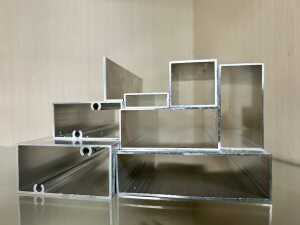
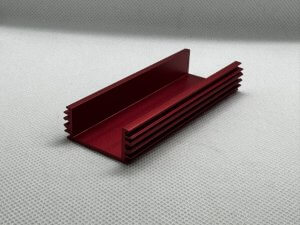
In the field of AI equipment, aluminum is not only used for structural support but is also a key factor in overall design efficiency and thermal management. Aluminum extrusions are materials formed by forcing heated aluminum alloys through a die to create specific cross-sectional shapes. They are commonly used in machine frames, equipment housings, linear guide structures, and heat dissipation modules.
-
Special Material Requirements for AI Equipment
The key difference between AI equipment and traditional machinery lies in its intensive computing and high-temperature operation. Therefore, materials must meet the following requirements:
Stability
AI servers and equipment must maintain structural integrity during long-term operation. Aluminum extrusions provide excellent rigidity and stability, preventing deformation caused by thermal expansion and contraction.
Thermal Performance
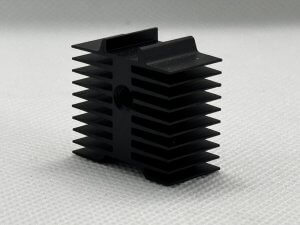
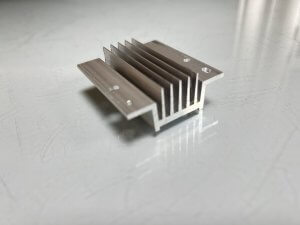
Aluminum has high thermal conductivity and is one of the most commonly used heat dissipation materials in electronic equipment. When combined with fin designs, it significantly improves cooling efficiency.
Modular Design
AI equipment evolves rapidly. Aluminum extrusions with T-slot structures allow for quick assembly and disassembly, making them ideal for flexible system configuration.
-
Key Characteristics of Aluminum Extrusions
Aluminum extrusions offer several core characteristics:
- Lightweight with High Strength
Compared to steel, aluminum weighs about one-third as much, yet through alloying and structural design, it can still provide excellent load-bearing capacity. - High Corrosion Resistance
Aluminum naturally forms an oxide layer on its surface, effectively resisting environmental corrosion and extending equipment lifespan. - High Machining Flexibility
It supports cutting, drilling, tapping, CNC machining, and various post-processing methods, making it suitable for customized applications. - Excellent Surface Consistency
Through anodizing or powder coating, aluminum extrusions can achieve high-quality finishes that match the aesthetic standards of high-tech equipment.
-
Industry Status of Aluminum Extrusions
The aluminum extrusion industry has a well-established supply chain, covering everything from aluminum billet supply and die design to precision machining. Driven by the growth of AI equipment and the semiconductor industry, demand for aluminum extrusions continues to rise.
Manufacturers in Taiwan are increasingly focusing on high-precision extrusion, fast delivery, and customized design services. At the same time, they are gradually adopting smart manufacturing and automation technologies to further enhance quality and efficiency.
Manufacturing Process of Aluminum Extrusions
Understanding the manufacturing process of aluminum extrusions is key to ensuring product quality and performance. The process typically includes the following stages:
-
Aluminum Alloy Preparation
The process begins with selecting suitable aluminum alloys, such as 6061 and 6063, known for their excellent extrudability and mechanical properties. The material undergoes melting and composition adjustment to ensure proper strength and ductility.
-
Die Design and Manufacturing
The die is the core of the extrusion process, determining the cross-sectional shape and precision. Design considerations include material flow, pressure distribution, cooling rate, and forming stability. AI equipment profiles often require complex designs, demanding high technical expertise.
-
High-Temperature Extrusion
Aluminum billets are heated to approximately 400–500°C to reach a plastic state, then forced through the die under high pressure to form the desired shape. Precise control of temperature and pressure is essential to avoid deformation or internal defects.
-
Cooling and Straightening
After extrusion, the material is rapidly cooled to stabilize its structure. It is then straightened to ensure dimensional accuracy and linearity, which is critical for AI applications.
-
Cutting and Initial Machining
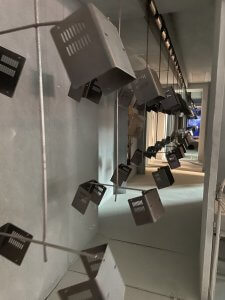
The extrusions are cut to specified lengths and undergo basic machining such as drilling and tapping. Automation is often used to improve efficiency and consistency.
-
Surface Treatment
Surface treatments include:
- Anodizing
- Powder coating
- Sandblasting
These processes enhance both appearance and resistance to corrosion and wear.
-
CNC Precision Machining
For high-precision AI equipment, CNC machining is performed to ensure tight tolerances and structural accuracy. This is one of Taiwan’s key competitive strengths.
-
Quality Inspection and Assembly
Final inspection includes checks on dimensions, tolerances, and surface quality. Some products are assembled into modules for quick integration into equipment systems.
Advantages and Competitive Benefits of Aluminum Extrusions in AI Equipment
With the rapid growth of the AI industry, aluminum extrusions demonstrate exceptional application value, extending beyond material properties to overall system efficiency.
-
Modular Design Improves Efficiency
Standardized structures allow for quick assembly without welding, significantly reducing development and installation time.
-
Cost Efficiency
Although aluminum material costs may be higher, ease of processing and faster assembly reduce overall costs, especially in mass production and customized projects.
-
Excellent Heat Dissipation
High thermal conductivity helps reduce operating temperatures and extend equipment lifespan.
-
Environmental Sustainability
Aluminum is 100% recyclable, aligning with ESG and green manufacturing trends.
-
Structural Strength and Safety
Optimized design enables high structural strength while maintaining lightweight properties, which is essential for large AI systems and automation equipment.

In conclusion, the requirements for materials in AI equipment have evolved beyond basic structural support to encompass thermal management, modularity, and high precision. Under these demands, aluminum extrusions have become an indispensable core material in the AI industry due to their superior properties, mature manufacturing processes, and versatile applications.
From raw material selection and die design to precision machining, every stage directly impacts final product quality. Taiwan’s well-integrated aluminum extrusion supply chain and technical expertise have positioned it as a key player in the global AI equipment industry.
As AI, automation, and smart manufacturing continue to advance, the application scope of aluminum extrusions will expand further, moving toward higher precision, greater efficiency, and more environmentally friendly production.
For related needs such as customized die development, multi-material co-extrusion, composite processing, and surface treatment services, please contact 【Yuan-Cheng Aluminum Co., Ltd.,】 in Tainan, Taiwan for professional support.
contact us
what’s app >>