YCAL Solar Aluminum Mounting Structures – Recommended Manufacturer: Yuan-Cheng Aluminum
Driven by Taiwan’s renewable-energy policies and corporate carbon-reduction goals, solar power systems are no longer limited to large-scale power plants. From factory rooftops and agricultural facilities to solar carports and residential installations, precision-engineered and highly weather-resistant aluminum mounting systems are now widely adopted. Experts in the aluminum-extrusion industry have observed that the market increasingly prioritizes structural safety, corrosion resistance, construction efficiency, and customization capability~factors that determine whether premium solar mounting suppliers can stand out in a competitive market.
Based in Tainan and deeply experienced in aluminum extrusion processing, Yuan-Cheng Aluminum has continuously enhanced its material selection, mold design, and surface-treatment technologies, earning the trust of numerous EPC contractors and system integrators. Starting from current industry conditions, this article provides an in-depth analysis of the characteristics, manufacturing processes, and advantages of aluminum solar structures, helping owners and engineering teams make more accurate decisions when planning photovoltaic systems.
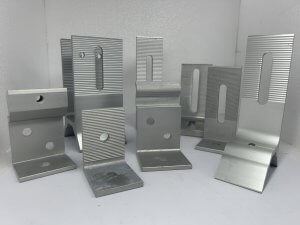
Current Market Conditions for Aluminum Solar Structures
With the government promoting energy transition, the scale of photovoltaic projects in Taiwan continues to expand~from traditional ground-mounted plants to rooftop systems, aquaculture-solar hybrids, agrivoltaic installations, and industrial facilities.
Different environments impose very different demands on mounting structures,
such as:
-
Coastal areas: Severe salt-spray exposure requires superior corrosion resistance
-
Mountainous or high-wind zones: Structures must balance light weight with high strength
-
Rooftop systems: Loads must be minimized while preserving waterproofing layers
-
Agricultural installations: Height and tilt angles must be adjustable to suit crop growth and sunlight conditions
Although steel offers high strength, its heavy weight, complex installation, and anti-corrosion maintenance costs have driven many projects to adopt aluminum systems instead~making aluminum solar mounting structures one of today’s mainstream solutions.
Core Advantages and Features of Aluminum Solar Mounting Systems
Within the overall cost structure of a photovoltaic plant, mounting systems may appear secondary to modules, yet they directly influence installation efficiency, structural integrity, and long-term operating expenses.
The rapid adoption of aluminum extrusion systems in Taiwan is largely due to the following engineering-level advantages:
-
Lightweight with High Structural Strength
Aluminum alloys have low density, significantly reducing roof and foundation loads~particularly beneficial for retrofitting existing buildings. Through cross-section optimization and structural analysis, systems maintain excellent wind-resistance and bending performance, suitable for typhoon-prone regions.
-
Outstanding Corrosion and Weather Resistance
After anodizing or high-grade coating, aluminum components can withstand salt spray, moisture, and ultraviolet exposure for decades, making them ideal for coastal, industrial, and high-humidity environments while greatly reducing repainting or replacement costs.
-
Modular Design for Faster Installation
Profiles can integrate grooves, bolt channels, and rails directly into their geometry, allowing on-site assembly with simple fastening~minimizing cutting and drilling and shortening construction schedules for large projects.
-
High Customization Flexibility
Tilt angles and heights can be adapted to roof slopes, terrain, module dimensions, and shading constraints. Custom cross-sections can also be developed for specialized sites, such as agrivoltaic systems, solar carports, or irregular plots.
-
Sustainability and Recyclability
Aluminum is fully recyclable, aligning with corporate ESG objectives and carbon-reduction strategies, while improving life-cycle environmental performance.
Application Scenarios for Aluminum Solar Mounting Systems
In real-world Taiwanese projects, aluminum structures are widely deployed in multiple environments, including:
-
Rooftop Photovoltaic Systems
Factories, logistics centers, office buildings, and residential rooftops are the most common installation sites. Aluminum’s lightweight nature minimizes reinforcement requirements, while waterproof clamps or penetrative bases maintain building integrity.
-
Ground-Mounted Power Plants
Large installations on vacant land, fishponds, or industrial zones often combine aluminum with steel primary structures, achieving strength while reducing total weight and corrosion-protection costs.
-
Solar Carports
Combining shading and power generation, these systems are popular in industrial parks and shopping centers. Aluminum’s sleek appearance and durability preserve aesthetics and reduce long-term refurbishment needs.
-
Agrivoltaic and Special Facilities
Greenhouses, livestock shelters, and farmland installations require elevated structures and wider spacing for light penetration and agricultural operations. Aluminum extrusion allows rapid adaptation through customized profiles and support modules.
Common Product Types of Aluminum Solar Mounting Systems
Depending on site conditions and construction methods, commonly used aluminum systems include:
-
Fixed-Rail Systems
The most widely adopted configuration, using aluminum rails and clamps to secure modules. Suitable for rooftop and ground installations, offering simplicity and fast assembly.
-
Adjustable-Tilt Systems
Diagonal braces and adjustable components allow modification of module angles, often used on rooftops or sites with specific orientation requirements to optimize energy output.
-
Ballasted Systems
Designed for flat roofs without roof penetration, these rely on concrete blocks or weights combined with aluminum frames to ensure stability.
-
Carport and Canopy Structures
Higher structures designed to accommodate vehicle circulation and wind loads, typically featuring thicker cross-sections and integrated drainage systems.
-
Custom Project-Specific Structures
Developed for irregular terrain, agricultural environments, or special operating conditions, combining structural safety, construction efficiency, and bespoke engineering solutions.
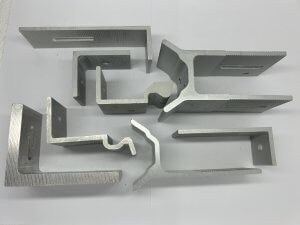
Complete Manufacturing Process of Aluminum Solar Mounting Systems
What truly determines quality is not only material selection but also the rigor of the entire production workflow. A professional aluminum manufacturer typically follows these steps:
-
Aluminum Alloy Selection
6000-series alloys are commonly used, balancing strength, corrosion resistance, and extrudability. Incoming materials undergo chemical analysis and batch traceability to ensure consistency.
-
Mold Design and Structural Analysis
Engineers analyze wind loads, snow loads (for high-altitude sites), spans, and anchoring methods using structural-analysis software to design optimal profile sections without over-engineering or compromising safety.
-
Aluminum Extrusion
Heated billets are forced through high-pressure dies to form long profiles. Dimensional accuracy and surface quality at this stage are critical to the entire manufacturing chain.
-
Cutting and Secondary Processing
Profiles are cut to length and CNC-machined for drilling, tapping, or slotting according to drawings, ensuring rapid on-site installation without modification.
-
Surface Treatment
Anodizing, powder coating, or specialized anti-corrosion finishes are applied based on site requirements~especially important for coastal and industrial environments.
-
Quality Control and Structural Testing
Before shipment, dimensional checks, coating-thickness measurements, and sample load tests ensure compliance with engineering specifications.
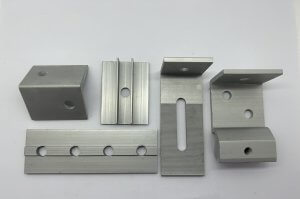
Why Choose Yuan-Cheng Aluminum?
From an industry perspective, price alone is never the deciding factor when selecting a manufacturing partner. Stable delivery schedules, customization capability, and technical support are equally essential.
Yuan-Cheng Aluminum continues to invest in mold development and structural engineering, providing project-specific cross-section designs and processing solutions that help EPC contractors achieve optimal safety-to-cost ratios during tendering.
Its high standards in surface treatment and quality management ensure every solar aluminum mounting system meets long-term outdoor performance requirements~an especially critical factor for investors seeking stable energy yields.

From a practical engineering standpoint, the long-term performance of a solar power system depends not only on module efficiency and inverter configuration, but more critically on whether the aluminum mounting structure can maintain stable performance for more than 20 years in outdoor environments.
Under Taiwan’s hot, humid climate~combined with strong ultraviolet exposure, frequent typhoons, and coastal salt spray~aluminum systems lacking rigorous structural design, precision manufacturing, and high-grade surface protection can suffer loosening, corrosion, or escalating maintenance costs over time, directly impacting project returns.
For this reason, manufacturers capable of integrating mold development, structural engineering evaluation, aluminum extrusion production, and surface-treatment planning are highly favored by EPC contractors and investors alike.
For aluminum extrusion systems, architectural louvers, customized molds, multi-material co-extrusion, composite processing, or advanced surface treatments, contact【Yuan-Cheng Aluminum Co., Ltd.,】 in Tainan, Taiwan.
Their professional team delivers end-to-end solutions~from raw materials and fabrication to design and on-site installation~ensuring structures that are not only durable, but also refined in both quality and appearance.
contact us
what’s app >>