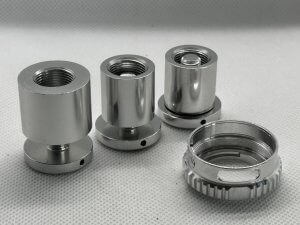
Taiwan Aluminum CNC Machining Factory Recommendation: YCAL Yuan Cheng Aluminum!
The manufacturing industry continues to upgrade, gradually shifting from traditional machining toward high-precision, automated, and customized production. Among these developments, the aluminum industry has become one of the fastest-growing sectors.
In industries such as semiconductor equipment, automated machinery, medical devices, electronic components, and construction engineering, aluminum is gradually replacing some traditional steel and iron materials due to its lightweight properties, corrosion resistance, fast heat dissipation, and high machining efficiency, making it a mainstream material in the market.
In modern manufacturing technology, CNC precision machining has become an essential technique in the aluminum industry. As modern products increasingly require precision and consistency, traditional manual machining can no longer meet the market demand for large-scale, high-precision production. As a result, the demand for high-precision, automated, and stable-quality aluminum alloy CNC machining continues to grow.
As an important industrial city in southern Taiwan, Tainan has a complete metal processing supply chain and experienced technical professionals. Therefore, many companies looking for aluminum processing partners tend to prioritize professional local machining factories in Tainan. In recent years, YCAL Yuancheng Aluminum has attracted attention from many companies and has become one of the representative professional manufacturers in southern Taiwan’s aluminum processing industry.
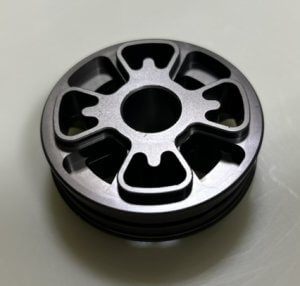
Why Have Aluminum Alloy Materials Become Mainstream in Modern Industry?
In the past, many industries mainly used iron, stainless steel, or other metal materials as primary structural materials. However, as industrial demand has changed, the market now places greater emphasis on lightweight design, high efficiency, and energy savings. Therefore, aluminum alloy has gradually become a preferred material in many industries.
The greatest advantage of aluminum lies in its combination of light weight and high strength. Compared with traditional steel, aluminum weighs only about one-third as much, yet after being adjusted with different alloy compositions, it can still achieve excellent structural strength. This makes it widely used in various high-precision industries.
Lightweight design has become an important trend in modern equipment. When equipment weight is reduced, it not only lowers energy consumption but also improves operating efficiency and mobility. As a result, aluminum has gradually become a mainstream choice for automation equipment and mechanical components.
In addition, aluminum also has excellent corrosion resistance. Taiwan’s climate is humid, and ordinary iron parts are prone to oxidation and rust over time. However, aluminum naturally forms a protective oxide layer on its surface, effectively improving product durability.
In the electronics and semiconductor industries, aluminum’s heat dissipation efficiency is another major advantage. Since aluminum has good thermal conductivity, many electronic housings, heat dissipation modules, and mechanical equipment components use aluminum as the main material.
Because aluminum also has excellent machinability, many industries now use aluminum alloy CNC machining to manufacture high-precision components and customized structural parts that meet different industrial requirements.
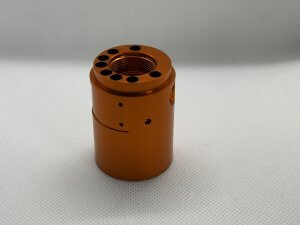
Features and Advantages of Aluminum Alloy CNC Machining
Traditional machining methods mainly rely on manual operation, which may easily cause dimensional errors due to differences in operator skill. However, with the advancement of industrial technology, most high-precision parts are now processed using CNC equipment.
CNC refers to the use of computer numerical control to operate machining equipment, allowing machines to automatically process materials according to programmed instructions. The biggest advantage of this method is that it significantly reduces human error while improving machining efficiency and product consistency.
Many industries now have extremely high precision requirements for parts, including semiconductors, automation equipment, medical devices, and precision machinery. These industries often require extremely small tolerance ranges, making professional aluminum alloy CNC machining a basic market requirement.
The greatest feature of CNC machining is its ability to process complex structures and difficult parts. In the past, manual machining had difficulty handling curved surfaces, deep holes, or special angles. However, high-precision equipment can now effectively complete various complex machining requirements.
In addition, CNC machining offers several key advantages.
-
High machining stability:
Since the machining process is controlled by computer programs, even mass production can maintain consistent precision and quality.
-
High machining efficiency:
Modern CNC equipment is equipped with high-speed cutting and automatic tool-changing functions, effectively shortening production time.
Compatibility with multiple post-processing methods: After aluminum parts are machined, they can undergo surface treatments such as anodizing, sandblasting, brushing, laser engraving, and baking paint to further improve product texture and durability.
Therefore, when many companies choose a machining factory today, they no longer consider only price. They pay more attention to machining quality, stability, and subsequent integration capabilities.
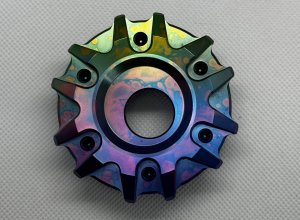
Aluminum Alloy CNC Machining Process
Many people think machining simply means cutting materials, but a truly professional machining process includes every step from early planning to final inspection. Each stage directly affects product quality.
First, in the early stage of machining, engineers confirm the customer’s product requirements, including dimensions, tolerances, material type, application, and subsequent surface treatment needs.
This stage is very important because different industries have completely different product requirements. For example, automation equipment emphasizes structural strength and assembly precision, while electronic equipment may focus more on heat dissipation and appearance quality.
After requirements are confirmed, material selection follows. Common aluminum materials currently include 6061 and 6063, among others. Different aluminum materials also affect machining methods and final applications.
Next is CAM programming. Engineers plan tool paths, cutting methods, and machining sequences according to product drawings to ensure smooth processing.
During formal machining, the equipment automatically processes the material according to the programmed settings, including:
-
Drilling
-
Milling
-
Tapping
-
Slotting
-
Chamfering
-
Surface contour machining
Advanced aluminum alloy CNC machining equipment now even supports multi-axis simultaneous machining, allowing complex parts to be completed in one process and greatly improving machining efficiency.
After machining is completed, full inspection is still required. Professional machining factories usually use coordinate measuring machines, height gauges, and precision measuring equipment to confirm whether the product meets drawing specifications.
Truly professional machining is not only about producing parts, but more importantly, maintaining long-term stable mass production.
Introduction to Common Aluminum Alloy Grades
In the aluminum processing market, different aluminum alloy grades are selected according to different applications. Since each aluminum material differs in hardness, corrosion resistance, ductility, machinability, and strength, material selection is a very important step before actual machining.
Especially in automation equipment, semiconductor equipment, construction engineering, and precision parts industries, choosing the wrong material may not only affect product lifespan but also cause machining difficulties, deformation, or insufficient structural strength.
The following are the most common aluminum alloy grades in the current market.
-
6061 Aluminum Alloy
6061 is one of the most common aluminum materials in Taiwan’s industrial sector and also one of the most widely used grades.
Its key characteristics include:
- Good strength
- High corrosion resistance
- Stable machinability
- Good welding performance
- Low deformation tendency
Therefore, it is very suitable for mechanical equipment parts, industrial structural components, automation equipment, semiconductor equipment, fixture machining, and CNC precision parts.
Many high-precision aluminum alloy CNC machining products currently prioritize 6061 material because it achieves an excellent balance between machining stability and structural strength.
In addition, 6061 also performs well in subsequent anodizing treatment, making it suitable for products that require both appearance and functionality.
-
6063 Aluminum Alloy
6063 aluminum is one of the most commonly used materials in the aluminum extrusion industry.
Its characteristics include:
- Good surface texture
- High ductility
- Stable extrusion performance
- Attractive appearance
- Suitable for anodizing
Therefore, it is very suitable for aluminum extrusion frames, building structures, door and window systems, display racks, cleanroom equipment, and solar mounting systems.
As automation equipment increasingly adopts aluminum extrusion modules, demand for 6063 continues to grow.
Because the cutting strength of 6063 is slightly lower than that of 6061, 6061 is usually preferred when high-precision cutting or high-load structures are required.
Current Status of the Aluminum Processing Industry
At present, the aluminum processing industry can generally be divided into the following categories.
-
Aluminum Extrusion Industry
Aluminum extrusion is one of the most common processing methods.
Its principle is to heat aluminum billets and press them through molds under high pressure to form different cross-sectional shapes. The extruded profiles are then cut and further processed according to demand.
Common applications include:
- Industrial machine frames
- Solar mounting systems
- Cleanroom equipment
- Building structures
- Automation equipment
In recent years, due to the increasing demand for industrial automation, the aluminum extrusion market has continued to grow. In particular, the rising demand for modular equipment has further expanded the application scope of aluminum extrusion.
-
Aluminum Alloy CNC Precision Machining
In addition to basic aluminum extrusion, the fastest-growing market demand is high-precision machining.
As products become increasingly precise, traditional machining methods are no longer sufficient. Therefore, many companies are introducing high-precision aluminum alloy CNC machining technology.
Common machining services in the market include:
- Precision milling
- Tapping
- Drilling
- Surface contour machining
- Multi-axis machining
- Precision cutting
Semiconductor equipment and medical equipment industries have especially high requirements for machining accuracy, so demand for high-end machining continues to rise.
Research also indicates that high-precision equipment is gradually developing toward:
- Higher speed
- Higher precision
- Multi-axis capability
- Automation
-
Aluminum Surface Treatment Industry
After machining, aluminum materials usually require surface treatment.
Common surface treatment methods include:
- Anodizing
- Sandblasting
- Electrophoresis coating
- Baking paint
- Brushing
- Laser engraving
Among them, anodizing is one of the most common methods, helping improve aluminum’s corrosion resistance and appearance quality.
In recent years, the market has also placed greater emphasis on highly weather-resistant and visually refined surface technologies. As a result, demand for nano-coatings and advanced electrophoresis technologies has continued to increase.
How to Choose an Aluminum Alloy Processing Factory?
There are many machining factories in the market today, but not many truly have stable quality and long-term cooperation capabilities.
First, companies should prioritize whether the factory has real machining experience. Aluminum machining may seem simple, but in reality, different materials, thicknesses, and structures all require different processing techniques.
Second, equipment capability is also very important. Equipment quality directly affects machining precision and efficiency, so companies should confirm whether the factory has high-precision equipment and stable processing capability.
Next is quality control capability. A truly professional machining factory usually establishes a complete inspection system to ensure stable product dimensions and quality.
Finally, delivery time and service capability are also critical. Since market conditions change quickly, machining factories that can respond quickly and deliver steadily are more likely to become long-term partners.
This is why many companies looking for aluminum alloy CNC machining partners now value technical capability and stability more than simply comparing prices.

As industries continue to upgrade, aluminum processing technology is becoming increasingly important. From automation equipment and semiconductor industries to construction engineering and mechanical equipment, high-quality aluminum processing has long become an essential part of modern industry.As the market increasingly emphasizes high precision, customization, and stable mass production, choosing a professional machining factory affects not only product quality but also corporate competitiveness and brand trust.
A truly professional machining factory must not only have equipment capability, but also a complete processing workflow, material knowledge, quality control system, and long-term cooperation experience. These capabilities help customers effectively improve product quality and reduce production risks.
If you are looking for an aluminum processing factory with professional technology, stable quality, and complete machining capabilities, or if you need customized mold development, co-extrusion of different materials, composite processing, or surface treatment, please contact 【Yuan-Cheng Aluminum Co., Ltd.,】 in Tainan, Taiwan for service!
contact us
what’s app >>