What Types of Aluminum Interior Finishing Materials Are Available?
When entering a newly built home, commercial office, hotel, department store display area, or renovation site, it is easy to spot various applications of aluminum. It may appear as clean ceiling lines, door and window frames, or decorative wall trims. It may also be concealed within lighting fixtures, cabinets, partitions, and edge-finishing structures.
Aluminum is widely used not only because of its modern appearance, but also because it is lightweight, corrosion-resistant, easy to fabricate, dimensionally stable, and recyclable. By selecting the appropriate alloy, cross-sectional profile, surface treatment, and assembly method during the design stage, aluminum interior finishing materials can simultaneously meet aesthetic, functional, and durability requirements.
However, many types of aluminum products are available on the market. These range from standard aluminum sheets, aluminum extrusions, louvers, and decorative trims to specially customized components. Each product has its own applications and fabrication requirements.
If only the finished appearance is considered, it is easy to overlook material thickness, dimensional tolerances, structural strength, surface quality, and installation methods. This may eventually result in deformation, color variation, scratches, uneven joints, or insufficient load-bearing capacity.
The following sections explain the common types, material characteristics, manufacturing processes, practical advantages, and purchasing considerations so homeowners, interior designers, contractors, and procurement personnel can better understand how aluminum can be used.
What Are the Common Types of Aluminum Building Materials?
Aluminum products can be categorized according to their shape, manufacturing process, or installation location. Common products used in interior construction include aluminum extrusions, aluminum sheets, aluminum louvers, aluminum decorative trims, aluminum shutters, aluminum frames, aluminum honeycomb panels, and aluminum composite panels.
Although aluminum is the primary material in all these products, their strength, weight, surface appearance, and installation methods are not necessarily the same.
- Aluminum Extrusions
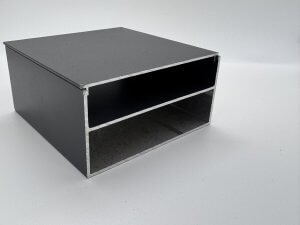
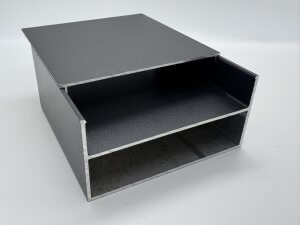
Aluminum extrusion is a manufacturing process in which a heated aluminum alloy billet is forced through a specially shaped die using an extrusion press. This produces a continuous profile with a consistent cross-section.
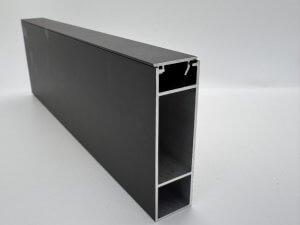
Common cross-sectional shapes include square tubes, rectangular tubes, round tubes, angles, channels, I-shaped profiles, and various custom designs. With a properly designed die, grooves, screw ports, cable channels, mounting flanges, decorative edges, and reinforcing ribs can all be integrated into a single profile.
These materials are highly suitable for door frames, screens, partition frames, display racks, lighting channels, cabinet frames, modular furniture, and equipment enclosures.
Their greatest advantage is the flexibility of cross-sectional design. Custom dies can be developed according to actual requirements, while standard profiles can be used to shorten production time. Aluminum extrusions are especially advantageous for projects that require mass production or standardized specifications.
- Aluminum Sheets and Perforated Aluminum Sheets
Aluminum sheets have flat, even surfaces and can be cut, bent, punched, laser-cut, or engraved as required. They are commonly used for wall cladding, ceilings, door panels, cabinet finishes, sign backboards, and equipment enclosures.
When evenly arranged holes are created in an aluminum sheet, it becomes a perforated aluminum sheet. In addition to adding visual depth, perforations can provide ventilation, heat dissipation, sound absorption, or screening functions.
The appropriate aluminum sheet thickness must be evaluated according to panel dimensions, spacing between fixing points, and installation location. The larger the surface area and the fewer the supports, the more attention must be paid to panel rigidity and thermal expansion.
In construction projects, folded edges, reinforcing ribs, backing materials, or smaller panel divisions are often used to improve flatness and reduce the risk of deformation.
- Aluminum Louvers and Linear Panels
Aluminum louvers are commonly used on ceilings, walls, entrance areas, decorative façades, and space-dividing features. Their regularly arranged lines can visually increase the perceived height or length of a space while preserving airflow and access for maintenance.
Lighting systems, air-conditioning equipment, acoustic materials, or utility lines can be installed behind the louvers, allowing aesthetics and functionality to be integrated.
Linear panels consist of long, continuously arranged components. They are commonly installed in commercial spaces, office lobbies, public areas, and residential ceilings. When selecting these products, attention should be paid to spacing, depth, thickness, suspension structure, and viewing angles to prevent excessive exposure of utility lines or fasteners from certain directions.
- Aluminum Decorative Trims and Edge Profiles
Although decorative trims and edge-finishing profiles are relatively small components, they directly affect the overall quality of the finished project.
They are commonly used on external tile corners, floor transitions, wall divisions, cabinet edges, glass fixings, skirting boards, and door-frame details. Aluminum can be manufactured into right-angle, rounded, recessed, T-shaped, U-shaped, or L-shaped profiles, creating cleaner transitions between different materials.
In addition to color, designers must confirm the height, width, engagement depth, and bonding method. If the dimensions are unsuitable, even an attractive finish may result in uneven levels, visible gaps, or fastening problems.
Before construction begins, it is advisable to conduct a trial assembly using actual samples and the adjacent materials.
- Aluminum Frames, Glass Frames, and Partition Systems
Aluminum frames are lightweight, straight, and quick to assemble. They are commonly used for sliding glass doors, office partitions, display cabinets, shower doors, and interior windows.
A slim-frame design increases the visible glass area and creates an open, transparent appearance. A more substantial frame, on the other hand, can provide greater stability and more space for installing hardware.
These products require the simultaneous consideration of glass thickness, frame grooves, door-panel weight, roller or hinge specifications, and the convenience of future disassembly and maintenance.
For areas where doors are opened and closed frequently, designers should not focus solely on achieving an extremely narrow frame. Adequate structural thickness and fastening positions must also be retained.
- Aluminum Shutters and Ventilation Components
Aluminum shutters can control visibility, light, and airflow. They are suitable for air-conditioning return vents, mechanical room screens, cabinet ventilation, window shading, and interior partitions.
The angle, spacing, and arrangement of the blades affect the level of screening and ventilation. Therefore, they must be designed according to their actual function instead of appearance alone.
Compared with wooden shutters, aluminum shutters are less likely to swell, develop mold, or suffer insect damage due to moisture. Compared with steel products, they are lighter and can provide excellent weather resistance after receiving the appropriate surface treatment.
They are particularly suitable for bathrooms, kitchens, and semi-outdoor areas.
- Aluminum Honeycomb Panels and Aluminum Composite Panels
Aluminum honeycomb panels consist of a face sheet, a back sheet, and a honeycomb-shaped core. They provide excellent panel rigidity at a relatively low weight, making them suitable for large wall surfaces, doors, ceilings, and decorative cladding.
Aluminum composite panels consist of aluminum surface layers bonded to a central core. They are easy to cut, groove, and bend, and are commonly used for walls, signs, and cabinet finishes.
The internal structure, fire-resistance rating, fixing method, and suitable installation environment differ between these two materials. They should not be evaluated by appearance alone.
For public spaces or locations subject to specific regulations, the fire performance, inspection documents, and construction system must also be verified for regulatory compliance.
Characteristics of Aluminum Interior Finishing Materials
-
Lightweight Construction Reduces Structural and Installation Loads
The density of aluminum is approximately one-third that of steel. Therefore, aluminum components are usually much lighter than steel components of the same volume.
For ceilings, movable doors, display systems, and suspended decorative features, lightweight construction reduces structural loads and makes transportation, positioning, and installation easier. When a door panel is lighter, the load placed on rollers, hinges, and hardware is also reduced.
However, being lightweight does not mean that every size can be used without further evaluation. The load-bearing capacity of a component still depends on its alloy, temper, cross-sectional shape, wall thickness, span, and fixing method.
Professional designs use reinforcing ribs, hollow chambers, and appropriate sectional geometry to improve bending and torsional resistance.
- Corrosion Resistance Makes Aluminum Suitable for Humid and Variable Environments
When aluminum comes into contact with air, a dense oxide film naturally forms on its surface. This film helps slow down further oxidation of the underlying metal.
Anodizing, powder coating, and other surface finishes can further improve corrosion resistance and appearance stability. For this reason, aluminum is commonly used in bathrooms, kitchens, balcony edges, and areas near entrances.
However, corrosion resistance does not mean the material can never be damaged. Long-term exposure to strong acids, strong alkalis, salt, residual cleaning agents, or improper contact with dissimilar metals may cause corrosion, spotting, or surface discoloration.
Suitable surface treatments should be selected for coastal regions and highly humid environments, while proper isolation should be provided at joints between dissimilar metals.
-
Dimensional Stability Supports Precision Assembly
Aluminum extrusion can produce continuous profiles with consistent cross-sections. When combined with precision sawing, drilling, and milling, it can be used to create standardized assembly systems.
For glass frames, partitions, lighting channels, furniture frames, and equipment enclosures, stable dimensions help control gaps, vertical alignment, and horizontal alignment. They also make it easier to replace components on-site.
Aluminum is still subject to thermal expansion and contraction. Reasonable expansion allowances must be provided for long components, locations exposed to intense sunlight, and areas with significant indoor-outdoor temperature differences.
If components are completely locked in place or if the joints are inadequately designed, abnormal sounds, bending, compressed joints, or surface bulging may develop over time.
-
Diverse Surface Treatments Provide Excellent Design Flexibility
Anodizing can give aluminum a silver, matte black, champagne, bronze, or similar finish. Powder coating can also produce a wide variety of colors and textures.
Additional options include wood-grain transfer printing, brushing, sandblasting, and polishing. These finishes can be used in modern, industrial, Japanese-inspired, luxurious, or natural interior styles.
Slight color variations may occur between different production batches, material tempers, and fabrication directions. When numerous components must be assembled on the same visible surface, it is best to use materials from the same batch and complete their surface treatment together.
The components should also be arranged according to a consistent orientation before installation. This is particularly important for brushed and wood-grain finishes because inconsistent grain directions can be highly visible after completion.
-
Recyclability Supports Circular Material Use
Aluminum can be recycled and retains economic value when properly sorted.
If screws, clips, or detachable connections are incorporated during the design stage, different materials can be separated more easily during future replacement or demolition. This improves maintenance and recycling efficiency.
For projects that prioritize green buildings, circular design, and whole-life costs, recyclability is a practical advantage.
The Aluminum Manufacturing Process from Raw Material to Finished Product
Understanding the manufacturing process helps designers determine which shapes are practical, which dimensions are easier to manufacture, and which requirements could substantially increase costs.
From drawing approval to delivery, aluminum extrusion production generally involves requirement confirmation, alloy selection, die design, extrusion, heat treatment, straightening, cutting, secondary machining, surface treatment, inspection, and packaging.
-
Requirement Confirmation and Drawing Evaluation
The first step is to clarify the product application, installation location, load conditions, visible surfaces, required length, quantity, and subsequent machining processes.
Engineering drawings should indicate cross-sectional dimensions, wall thicknesses, tolerances, hole positions, angles, and critical mating areas. If the product will be assembled with glass, wooden panels, hardware, or other profiles, all corresponding dimensions must also be confirmed.
The most important task at this stage is to strike a balance between appearance and manufacturability.
Walls that are too thin, excessive variations in wall thickness, extremely deep and narrow slots, or unreasonable projecting sections may cause uneven metal flow, deformation, and accelerated die wear.
Having the extrusion manufacturer review the cross-section before the die is produced can usually reduce the time required for repeated die corrections.
-
Selecting the Alloy and Material Temper
6000-series aluminum alloys are commonly used for interior and architectural extrusions because they offer good extrudability, corrosion resistance, and machinability.
However, different grades still vary in strength, surface quality, machinability, and bendability. The material temper is related to the extent of heat treatment and affects hardness and mechanical properties.
Material selection should not be based solely on the general term “aluminum.” Load-bearing frames, finely finished components, parts requiring bending, and components requiring extensive machining may each need different alloys and tempers.
If the wrong material is selected at the beginning, additional processing may not be able to compensate for its inherent limitations.
-
Die Design and Manufacturing
Special cross-sections require dedicated dies. Die designers plan the metal-flow channels and support structures according to the profile shape, openings, tongue ratio, wall thickness, and extrusion direction.
Hollow and complex cross-sections are generally more challenging than simple solid profiles. Their dies may cost more and require additional corrections.
After the die is completed, a trial extrusion is performed. This process does more than confirm whether the desired shape can be extruded. It also evaluates dimensions, straightness, twisting, surface lines, and metal-flow speed in different areas.
If the results do not meet the requirements, the die must be corrected and tested again. This is why sufficient lead time must be allowed during the early stages of a custom aluminum extrusion project.
-
Billet Heating and Extrusion
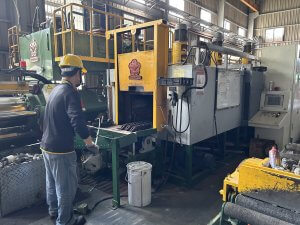
Aluminum alloy billets are heated to a suitable plastic-forming temperature and then placed inside the extrusion press container.
A ram applies pressure and forces the aluminum through the die opening, creating the required cross-section. The elongated profile remains hot as it exits the die and must be cooled and pulled to control its shape and metallurgical condition.
Extrusion speed, temperature, pressure, and cooling conditions all affect product quality. Excessive extrusion speed may cause surface defects or dimensional instability, while improper temperature control may affect strength and appearance.
Experienced manufacturers adjust these parameters according to the alloy, cross-sectional complexity, and product requirements.
-
Stretch Straightening, Aging, and Cutting to Length
After cooling, the extruded profiles may contain slight bending or internal stress. Stretch straightening is therefore performed to improve straightness and dimensional stability.
The profiles are then aged according to the alloy and required mechanical properties. This allows the material to reach the specified hardness and strength before being cut to the lengths requested by the customer.
For long profiles, transportation methods, packaging, and on-site handling should be planned in advance. A profile may be straight when manufactured but can still become bent during stacking, lifting, or impact.
Slender products and components with demanding appearance requirements generally require protective layers, stable supports, and scratch-resistant packaging.
-
Secondary Machining
An extruded profile is generally not yet a finished component. It may still require sawing, drilling, tapping, punching, milling, CNC machining, chamfering, bending, or welding.
The precision of secondary machining directly affects assembly performance, especially at hardware mounting holes, clips, end joints, and multi-part assembly positions.
When designing hole positions, sufficient access must be provided for cutting tools. Consideration should also be given to whether a fixture can hold the workpiece securely.
If the visible surface is easily scratched, the fixtures and conveying process must include suitable protection. For mass production, dedicated jigs and fixtures can improve consistency and shorten processing time.
-
Surface Treatment
Common surface treatments include anodizing, powder coating, liquid coating, wood-grain transfer printing, sandblasting, brushing, and polishing.
Anodizing creates a thicker, more stable oxide layer on the aluminum surface while retaining its metallic appearance. Powder coating provides a broad range of colors and excellent hiding properties. Wood-grain transfer printing creates a wood-like appearance while preserving the durability of aluminum.
Cleaning and pretreatment are extremely important before surface finishing. Oil contamination, scratches, oxides, and machining marks may become more noticeable if they are not properly treated beforehand.
For components with strict appearance requirements, samples, gloss levels, color codes, coating thicknesses, acceptable color variations, and visual inspection standards should be confirmed in advance.
-
Quality Inspection and Packaging
Finished products must be inspected according to the drawings. Inspection items include cross-sectional dimensions, length, hole positions, straightness, twisting, surface color, and scratches.
For assembled components, trial assembly is recommended to verify the engagement of profiles, screws, and hardware. In addition to sampling inspections, critical dimensions may require a higher inspection frequency.
Packaging should be selected according to the product’s appearance requirements. Available options include protective film, EPE foam, separator paper, corner protectors, and wooden crates.
Even an excellent surface finish can develop unacceptable scratches if products rub against one another during transportation. Packaging should therefore be treated as part of the production process rather than as an additional task immediately before delivery.
What Are the Advantages of Aluminum Interior Finishing Materials?
-
Structural and Decorative Functions Can Be Integrated
Aluminum extrusions can integrate screw channels, clips, cable channels, decorative edges, and reinforcing ribs into a single cross-section, reducing the need for additional components and welding.
A well-designed profile not only has a clean appearance but also improves assembly efficiency. For modular cabinets, display racks, sliding doors, and partitions, this level of integration makes product standardization easier.
-
Fast Installation Creates a Cleaner Worksite
Many aluminum components can be cut, drilled, and surface-treated at the factory. They can then be assembled on-site using screws, brackets, clips, or hardware.
Compared with extensive wet construction, this approach can reduce dust, drying time, and on-site finishing work. It is particularly beneficial for operating retail stores, offices, and projects with tight schedules.
-
Durable and Easy to Maintain
Aluminum does not readily absorb water and does not suffer from the decay, insect damage, or moisture-related swelling associated with wood.
After receiving the appropriate surface treatment, it can generally be maintained using a soft cloth and a neutral cleaning solution.
When a modular design is used, damaged components can also be replaced individually without removing the entire structure.
-
Suitable for Different Styles and Material Combinations
Aluminum can be combined with glass, wood veneer, stone, ceramic tiles, acrylic, and lighting systems.
Matte black aluminum frames are suitable for modern and industrial styles. Champagne gold and bronze finishes can create a refined appearance. Silver and grayish-white finishes work well in technological or minimalist spaces, while wood-grain finishes soften the cool appearance of metal and help it blend into warm residential interiors.
-
High Precision Supports Repetitive Production
After the die and manufacturing process have been properly adjusted, aluminum extrusion can consistently produce profiles with the same cross-section.
It is suitable for retail chains, residential developments, shared facilities, modular furniture, and high-volume display equipment.
Consistent component dimensions not only improve assembly efficiency but also make material preparation, maintenance, and management across multiple project locations easier.
-
Facilitates Disassembly, Upgrades, and Recycling
When reversible connection methods are used, aluminum components can be repeatedly assembled and disassembled. During future renovations, parts of the original framework or components may be retained.
At the end of their service life, the materials are also easier to sort and recycle. For companies that value environmental responsibility, aluminum can support waste reduction, modular design, and circular resource use.
How Should Aluminum Building Materials Be Selected for Different Spaces?
-
Residential Spaces
Residential interiors emphasize tactile quality, details, and everyday maintenance. Suitable products include slim-frame sliding doors, edge profiles, skirting boards, lighting channels, louvers, and modular cabinet frames.
Matte black, champagne, or wood-grain finishes can be used in entrance areas and living rooms. Bathrooms and kitchens require greater resistance to moisture and cleaning products, as well as safer edge designs.
If children or older adults live in the home, exposed sharp edges should be avoided. Rounded corners, end caps, or protective edging should be used.
Movable doors must also incorporate anti-pinch protection, soft-closing mechanisms, stable tracks, and durable hardware.
-
Commercial Spaces
Retail stores, display cabinets, and food-and-beverage spaces often require rapid installation and may regularly update their displays.
Modular aluminum frames, removable shelving, lighting tracks, and decorative systems can shorten renovation time while preserving future adjustment flexibility.
Areas with heavy pedestrian traffic require greater surface wear resistance, corner protection, and fixing strength.
Commercial spaces also emphasize brand colors and overall visual consistency. Before mass production begins, samples should be prepared to confirm the color, gloss, texture, and actual appearance under the intended lighting conditions.
-
Office and Public Spaces
Offices commonly use glass partitions, aluminum-framed doors, ceiling louvers, acoustic components, and cable-management systems.
Fire protection, air conditioning, lighting, access control, and low-voltage systems should be integrated into the design. Access routes should also be retained for future maintenance.
In public areas, fire safety, emergency evacuation, impact resistance, and relevant regulatory requirements must also be verified.
-
Humid, Semi-Outdoor, and Coastal Environments
Standard indoor specifications should not be directly applied to these environments.
Suitable alloys, coating thicknesses, and finishing systems should be selected according to humidity, rain exposure, salt damage, sunlight, and temperature differences.
Drainage direction, joint waterproofing, fastener materials, and isolation between dissimilar metals must all be planned together.
Regularly removing salt deposits and other contaminants can also help extend the service life of the surface finish.
Professional Integration from Material Characteristics to Fabrication Details Is Essential for Quality Results

Aluminum interior finishing materials are available in many forms, including aluminum extrusions, sheets, louvers, shutters, decorative trims, door frames, and honeycomb panels. Each can serve different functions in residential interiors, commercial spaces, offices, and public construction projects.
Their primary characteristics include being lightweight, corrosion-resistant, dimensionally stable, available in diverse finishes, and recyclable. Their major advantages include the ability to integrate structural functions, high machining precision, fast installation, easy maintenance, and compatibility with a broad range of interior styles.
The quality of the finished product depends on more than the name of the material. It is influenced by the entire process, including application confirmation, alloy selection, cross-sectional design, die manufacturing, extrusion, secondary machining, surface treatment, packaging, and installation.
Even an attractive design may develop problems during installation or use if wall thickness, dimensional tolerances, structural loads, thermal expansion, and surface protection are overlooked.
Conversely, sufficient communication during the early stages and professional evaluation by a team familiar with aluminum extrusion can help balance appearance, functionality, project schedules, and costs.
If you are planning door frames, partitions, louvers, decorative trims, furniture frames, lighting channels, special aluminum extrusions, custom die development, multi-material co-extrusion, composite machining, or surface treatment and would like to confirm the appropriate materials, dies, processing methods, or finishing options, please contact YCAL Aluminum Industry in Tainan, Taiwan for professional assistance.
contact us
what’s app >>